West · US

Unattended Death Cleanup Planning in San Francisco, California

Planning unattended death cleanup in San Francisco, CA

San Francisco cleanup planning: the Medical Examiner's release, sealing the air system, removing soaked materials, and landlord records. No time claims. This is planning guidance, not a claim of a local office or crew in San Francisco.

Get an email reply about unattended death cleanup

Send a short message to the follow-up inbox. A coordinator can reply by email. This form does not send emergency help; call 911 first if anyone is in danger.

Tell us what you need help with. Share a short description; please leave out medical details, access codes, and other sensitive information.

A request does not confirm a booking. For immediate danger, contact local emergency services.

Or email info@prompartybuses.com

Direct answer

The short answer for San Francisco, CA

San Francisco's Victorian flats, tenancy-in-common (TIC) buildings, mid-rise apartments, and homes on steep lots share tight hallways and stacked plumbing. Their closed-up rooms make the smell and the spread of fluid worse when a death is found late. This guide covers the release from the Office of the Chief Medical Examiner, choices about soft materials, protecting the air system and stairwells, landlord and estate records, and privacy. You will not find claims here about a nearby office, a roster of workers, or how fast anyone can arrive.

Editorial guide · Biohazard Remediation NetworkUpdated 2026-07-22Location focus: San Francisco, CA

Local planning context

In stacked flats and hallway apartments, one closed-up unit can push its smell into the stairwell whenever a door opens. Soft wood floors over joists can let fluid drip into the unit below. In concrete mid-rises, the soak stays in the underlayment against the slab. Summer fog in the Sunset and the Richmond keeps windows shut for weeks, so the smell builds inside a closed flat. Narrow streets and little curb space limit staging. Planning sealed bag-out matters as much as mapping the moisture.

In crowded housing, a death is often found through a welfare check after missed rent, a caregiver's visit, or a neighbor's complaint. Insects on bay windows and in light wells often mean a longer time has passed. Shared laundry rooms and trash chutes make it tempting to move soft goods before anyone assesses them. Those moves can soil common paths. Seal off the unit and protect the stairs and elevators. List any items already moved to hallways or garages.

San Francisco's Chief Medical Examiner and SFPD decide when the flat is released. From then on, landlords, TIC associations, and estate representatives should write down who can approve tear-out and disposal. On blocks of stacked flats, neighbors share a front door and see everything, so lidded carts and early starts matter. Your file should prove the wet fir, pad, and plaster really left the building and that the meter said dry. That matters when units re-rent fast in a busy market.

Property considerations

Victorian and Edwardian flats: after a discovery upstairs, check the joists and the ceiling below for drip-through.

Mid-rise hallway buildings: close off the unit's returns and protect the elevators during bag-out.

Soft goods moved to a shared laundry or garage make the affected area bigger.

Newer vinyl planks laid over old fir in remodeled flats can hide how far fluid spread underneath.

Steep lots and narrow alleys limit dumpster access. Plan a sealed load-out done in stages.

TIC rules may require approval from several owners before any tear-out.

Built-in closets and cabinet kick spaces trap fluid that wiping never reaches.

Mold risk goes up when cool, damp outdoor air meets drying that was not finished.

Response-planning framework

Medical Examiner release and approval from several parties

Confirm the release through official channels. Then map who must approve entry and tear-out: the landlord, TIC owners, and the executor. Note limits on the stairwell, elevator, and curb before any floor is opened. Set up one way to settle disputes over what to save.

Check down through the floors and across the rooms

In stacked flats, look down as carefully as you look across. Check the ceiling below, moisture under the flooring, the baseboards, and any fabric already moved to the hall. Pictures of the floor layers under a Victorian's carpet explain later why more was opened.

Seal stairs, elevators, and hallways

Close off the worst area. Seal bags before they enter any shared path, and protect the floors. Do not use fans that push air into stairwells. HEPA scrubbers belong inside the sealed flat, not on the landing. Use odor machines only after the source is gone.

Records and the handoff for re-renting

Hand over item lists, waste records when used, moisture notes, and a rebuild list. Keep cleanup bills apart from cosmetic work. Give building management practical notes that protect privacy and leave out medical details.

Documentation checklist

  1. 1Medical Examiner release for the San Francisco address and signed access from the owner or TIC co-owners
  2. 2Map of who has authority: landlord, TIC owners, or estate
  3. 3Photos of the unit, the ceiling below if needed, and any soft goods that were moved
  4. 4Moisture readings through tear-out and drying
  5. 5List of soft materials and furniture removed
  6. 6Steps taken to protect the stairwell, elevator, and hallway
  7. 7Notes on closing off the air system
  8. 8Regulated waste records when they apply
  9. 9List of plaster, fir flooring, and trim repairs for the finish carpenter

Official resources

Questions for this location

How do stacked flats change the cleanup compared with a one-level unit?

Fluid can drip through wood floors into the ceiling and belongings of the unit below. Families who only replace the upstairs carpet may leave a source of smell and residue over a neighbor's living space. A good check looks at the ceiling below, takes moisture readings, and decides what to do about soiled insulation or plaster. When a different person owns each flat, record the findings for both households. Planning for fluid that moves down keeps the bid from being too low and prevents repeat visits after a surface-only clean.

A smell is coming from a flat in my San Francisco building. What should I do first?

If the smell suggests a death in a San Francisco flat, call for a welfare check instead of going in alone. After the Medical Examiner has released the unit, do not let staff or family clean, since that can spread residue. Lock the unit, limit who goes in, and contact the emergency contact or the estate. Close off shared light wells or vents where the smell is traveling. Note any insects from the doorway. Have someone map how far fluid soaked in before you give other tenants a timeline.

What do flies at a San Francisco bay window mean for the cleanup?

Flies and larvae tell you more time has passed than the stain alone suggests. In San Francisco flats, insects often gather at bay windows, curtains, and light wells. They can carry residue into the hallway or the unit above. Treat affected bedding, rugs, and curtains as contaminated waste. Add nearby rooms and the shared stair landings to the check. Putting insect findings on the moisture and odor map gives a truer picture of the job than the stain you can see.

How should you plan a curbside load-out on a crowded block?

On many San Francisco blocks, curb space is scarce, and a hazard bag on the sidewalk is visible to everyone. Seal every bag and bin inside the unit before it goes down the shared stairs. Park as close as the law allows, stage for minutes instead of hours, and keep the sidewalk clear for people walking by. On busy shopping streets, think about an early-morning start. Photograph how the stairs and entry were protected in case the building or an insurer asks later.

Which papers should a San Francisco family save once the flat has been cleaned?

In San Francisco, keep the official release, signed entry permission, and dated photos from before and after the tear-out. Save moisture notes, a room-by-room list of removed materials, and waste receipts. If the unit is in a TIC or a small flat building, record which co-owners or managers approved access and any work on the shared stairs. Keep the hazard-removal bills apart from rebuild bids. These records help if the flat is rented again, sold, or questioned by an insurer later.

Which office releases a San Francisco home?

San Francisco is a combined city and county. The San Francisco Office of the Chief Medical Examiner and any police investigation decide when a home is released. Please hold off on booking any crew until that San Francisco release is confirmed. Next comes a signed OK to go in, from the landlord, the building's manager, or whoever speaks for the estate. In buildings with several units, tell other residents only the work times and any stair or hallway limits.

How should co-owners in a San Francisco TIC building share decisions?

In a tenancy-in-common building, other owners may share the stairs, a garage, or a light well with the affected flat. The estate of the owner who died decides about the unit itself. Shared areas need agreement among the co-owners. Name one contact for the estate and one for the building. Agree in writing on stair protection, work hours, and any cleaning of shared spaces. Clear roles help neighbors who will keep living side by side.
Contact

Get help by email

Send a short message for an email reply about unattended death cleanup planning questions for the San Francisco Bay Area area.

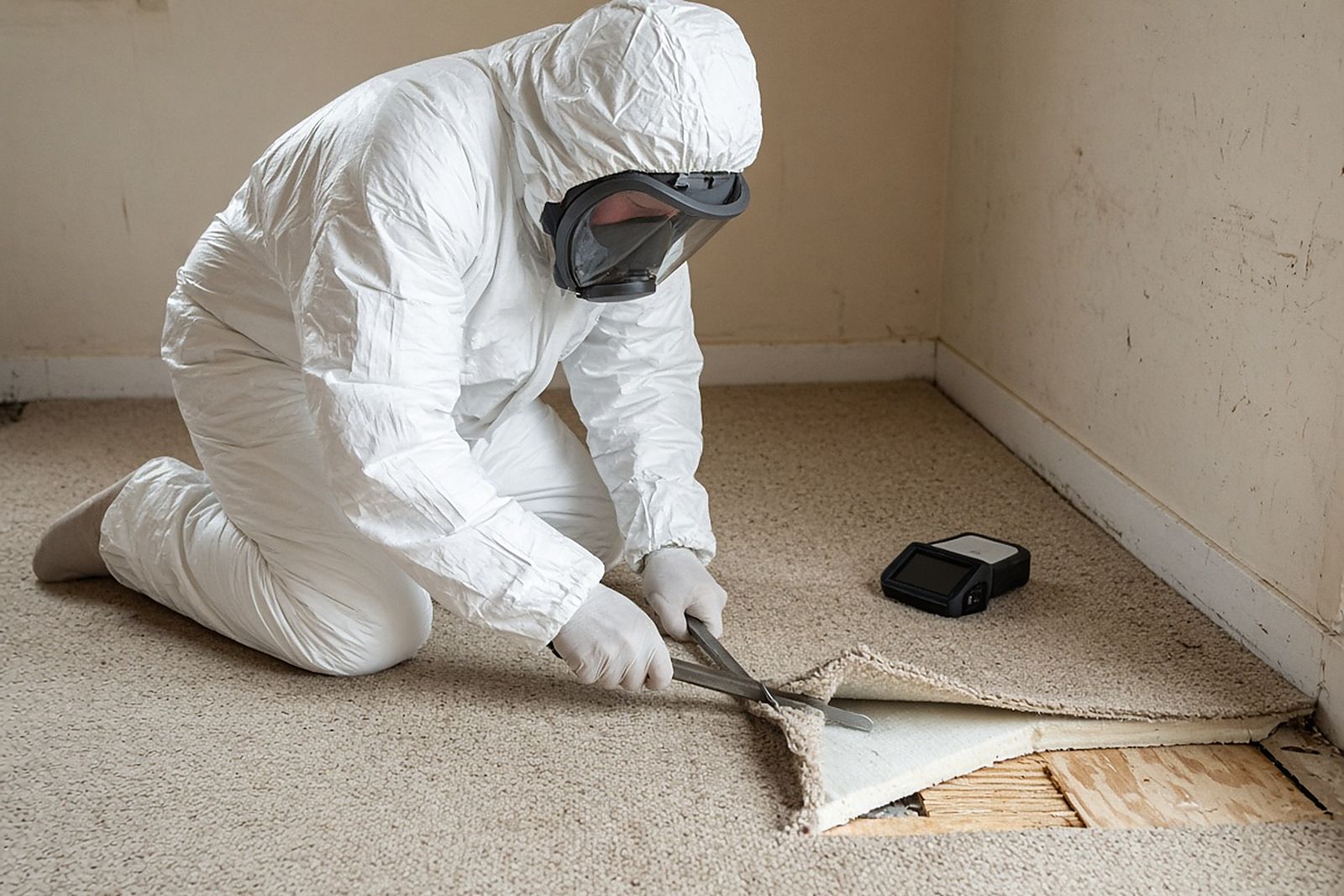
Technician in a full-face respirator cutting back carpet and pad to expose the subfloor
Illustrative photo, not a job record. Technician in a full-face respirator cutting back carpet and pad to expose the subfloor.
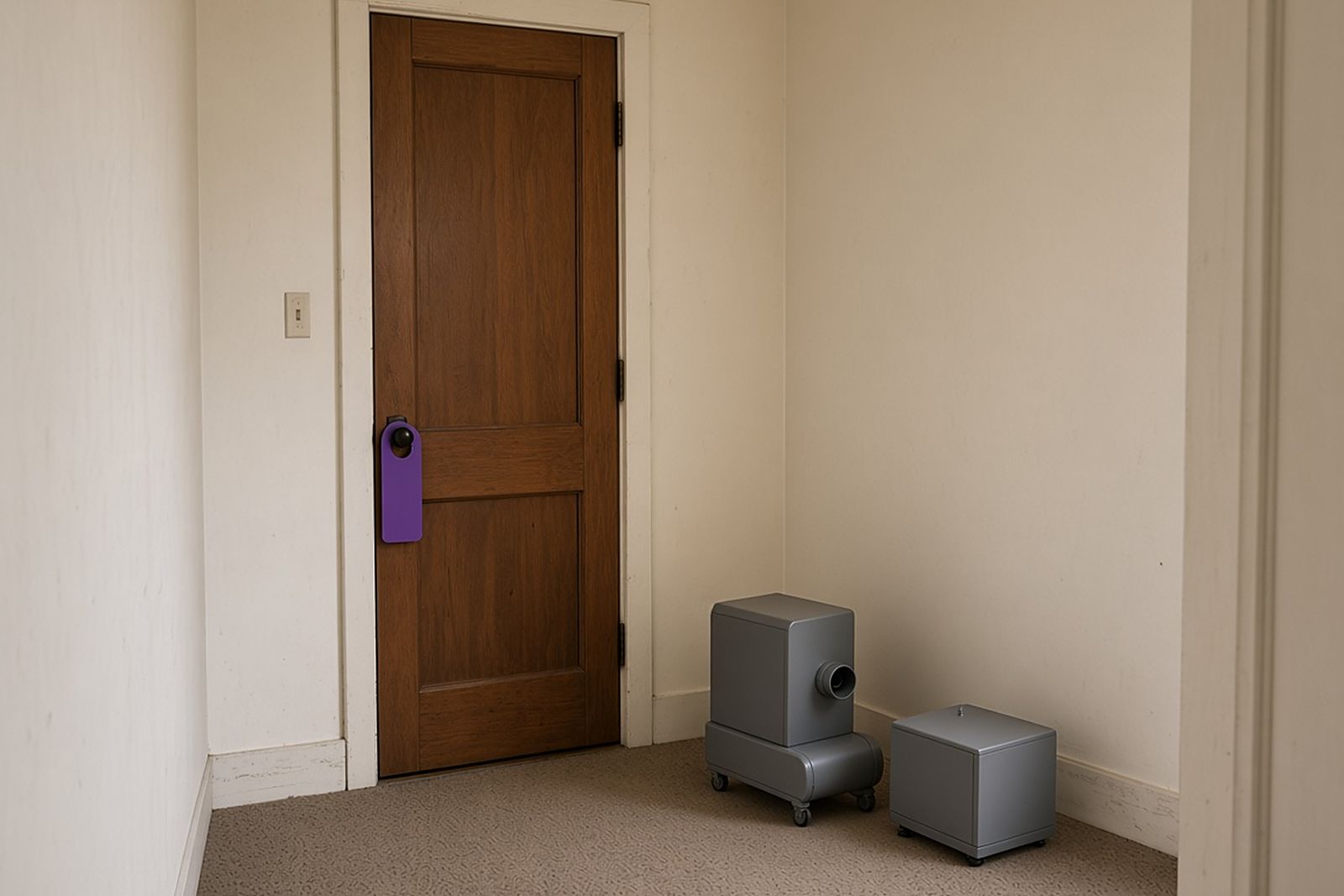
Air-filtration and odor-control units staged outside a closed door with a do-not-enter tag on the handle
Illustrative photo, not a job record. Air-filtration and odor-control units staged outside a closed door with a do-not-enter tag on the handle.

Unattended Death Cleanup figures to keep in mind

National and research figures, not San Francisco data. Local conditions, rules and providers vary; use these for scale and context only.

$200-$300 per hour

Fixr's 2025 guide lists unattended death cleanup at $200 to $300 per hour and hoarding cleanup at $25 to $150 per hour or about $1,000 per day.

Read with care: Fixr figures are editorial cost estimates compiled from contractor and industry data, not a statistical survey of completed jobs; local prices vary widely.

Source: Fixr (2025)United States, residential biohazard cleanup estimates, January 2025

1 in 3

About 1 in 3 U.S. adults report feeling lonely and about 1 in 4 report lacking social and emotional support.

Read with care: Applies to all adults; CDC notes older adults are at higher risk but gives no age-specific figure here.

Source: CDC (2024)United States, adults, national survey estimates

2.6%

Hoarding disorder affects about 2.6% of the population, with higher rates in people over 60.

Read with care: Prevalence estimates range 2-6% across studies.

Source: American Psychiatric Association (2024)General population prevalence estimate

These figures are public research and agency data, not this network's own job records. Keep each number with its population, year and limits; none of them predicts cost, timing or outcome at a specific property.

Plan before you reach out

Use the first 24 hours planner for immediate steps and the provider vetting checklist to confirm any San Francisco provider's training, insurance and waste path in writing.

What research has found

Findings from published studies of people and properties in situations like this one. They describe what researchers observed in a specific group; they are not predictions for your case.

Encountering the body at the site was not significantly associated with more nightmares or intrusive memories.
Who was studied: Same 666-parent Swedish cohort as S004; 147 encountered the body and 512 did not.Limits: Not independent of S004; site discovery differs from later formal viewing; no proof of harmlessness.Encountering the Body at the Site of the Suicide: A Population-Based Survey in Sweden (2017)
Family or friends were the most common initial information source for both claimant groups.
Who was studied: 765 UK Bereavement Support Payment (BSP) and 764 Funeral Expenses Payment (FEP) claimants; January 2021 interviews.Limits: Historical benefit-service experience, not current entitlement; entirely proxy-completed applications excluded.Bereavement services customer experience survey report (2021)

Unattended Death Cleanup community polls

Poll results

Every count is a real visitor vote; nothing is seeded or padded. One vote per poll per device, and you can change your answer.

Your experience

As a landlord, how long would you wait for the tenant's family before arranging cleanup yourself?

No visitor votes yet
Process

Which part of an unattended death project would you find hardest to manage?

No visitor votes yet

Planning cleanup in San Francisco?

Send a short message about the property to the follow-up inbox. A coordinator can reply by email with next steps.

Your request is sent to the follow-up inbox. A coordinator can reply by email.

If anyone is hurt or in danger, call 911 first.