Field guide
Unattended Death Cleanup: Qualified Provider Checklist
Compare unattended death cleanup companies by their proof. Check scene release, the site check, worker safety, belongings, waste, odor, and the final report.
For: Families, estate representatives, owners, landlords, property managers, insurers, and trustees choosing a cleanup company after the scene is released.
Organizational editorial byline · Updated 2026-08-01 · Verify case-specific requirements with the responsible authority.
Ask about your situation
Your request is sent to the follow-up inbox. A coordinator can reply by email. Not for emergencies; call 911 first if anyone is in danger.
Direct answer
What is the practical approach?
Choose an unattended death cleanup company by looking at the decisions it makes for your site. A general claim of certification is not enough. Confirm the scene release and who has the right to sign the contract. Require a site check that looks at how long the person was undiscovered and where fluids and responders went. It should cover soft materials and layers, insects, temperature, utilities, belongings, and nearby spaces. Ask how the company protects its workers and how its products match their labels. Ask how it handles waste and personal property. Ask how it tells odor sources apart from odor treatment, and what proof shows the job is done. Check insurance and any claimed local rules yourself. No company can know every hidden problem from odor alone. None can promise permanent results without a written plan.
Confirm the release, who can approve work, and caring communication
An unattended death may involve police, a coroner or medical examiner, building staff, relatives, an estate, a landlord, and an insurer. Before property work starts, write down which official released which rooms and items. Note when the release happened and which limits remain. The fact that responders are gone is not enough proof. Find the person who can approve entry, tear-out work, decisions about personal things, bills, and final sign-off. A good company pauses when it is unclear who has authority. It does not treat a key or a family tie as permission for everything.
Look at how the company communicates before you share private details. It should use neutral, practical words and keep graphic photos to a minimum. It should keep family updates apart from technical approvals and say who can see records. Neighbors and building staff may need schedule or access details without learning the cause or circumstances of death. A trustworthy company doesn't use photos for marketing without clear, informed permission. It doesn't try to diagnose grief or suggest that cleanup heals emotional pain. Care should show up as privacy, patience, and clear choices, not sales pressure.
Ask for a real site check, not an estimate based on odor
Time before discovery matters. Fluids, heat, humidity, air flow, insects, movement, and how things are built can all change how far the damage reaches. But no set timer decides what must be torn out. The person doing the check should record what is known and unknown about timing. They should note room conditions, utilities, visible matter, and where floors meet walls. They should also check furniture, responder paths, lower floors, shared systems, belongings, and areas that can't be reached. Odor can point to a question. It cannot map every hidden source or prove a surface is affected. An estimate given from the doorway or by phone should stay a rough first guess.
Ask how the company will look under or behind finishes without getting approval for unlimited removal. A useful plan names the spots to open, safety steps, the most it will open, stop points, photos, and who approves changes. It tells direct contact apart from fluid that may have spread. It also separates other problems, such as flies, moisture, or damaged materials. The company should explain what it saw that supports keeping a material or opening a wall or floor. It should also explain when it will call in pest control, or send structural, electrical, HVAC, plumbing, or special-item work to others.
Look closely at worker safety and plans for needles and sharp objects
OSHA has said its Bloodborne Pathogens standard applies to covered contractor workers who clean blood after unattended deaths. The employer's duties include an exposure control plan, safe equipment and work steps, and protective gear (PPE). They also include training, hepatitis B shots, a medical check after an exposure, and records. These are rules for employers. They are not a national consumer license or a government stamp of approval for the company. Ask how the actual tasks shape the plan. Don't accept "OSHA certified" as the whole answer.
The site check should also cover needles, broken glass, fluids from decomposition, chemical products, and insects. It should cover heat stress, lifting, electricity, tight spaces, and slips. Protective gear must match the task and how exposure could happen. Using a respirator may require a medical check, fit testing, choosing the right one, upkeep, and training under a separate standard. Ask about clean entry, dirty exit, taking gear off safely, hand washing, cleaning tools, and protecting shared routes. Dramatic protective suits don't show whether those steps fit together.
Review cleaning, removal, belongings, and odor choices one by one
The proposal should list each important part of the room. It should say whether each will be cleaned, removed, opened to check, protected, or sent to a specialist. Sealed tile, bare wood, carpet pad, drywall, insulation, upholstery, electronics, papers, and subfloor differ. They are not equally easy to reach or treat. The company should tie each choice to what it saw. That can mean soaking in, seams, undersides, cracks, nail holes, swelling, layers pulling apart, or whether it can prove the agreed finish line for the job. Sentimental value can be a reason to try special restoration. It can't make hidden contamination possible to check.
Odor control starts with finding the source and deciding what happens to affected materials. Fresh air, odor-absorbing products, filters, cleaning, or other treatments may help the plan. But air fresheners and odor treatments can't replace removing a source you can reach. Ask the company to tell the main affected material apart from other odor sources. Those can include drains, trash, pests, moisture, the HVAC, neighboring units, or unrelated building smells. Turn down promises that odor will be gone forever. Temperature, humidity, rebuilding, hidden spaces, and future building conditions are outside any complete guarantee.
Check product and waste claims against the rules
For disinfectants, ask for the product name and EPA registration number. Ask what germs or uses are on the label, which surfaces it is safe for, and how to mix and apply it. Ask how long the disinfectant must stay wet, and about air flow and other safety steps. EPA-regulated pesticide labels set the legal directions and limits. Registration does not make a product right for every material. It does not prove the surface was cleaned first. A company should record where the product was used. Fogging, strong mixes, scent, or a broad "hospital grade" label are not proof the cleanup is complete.
Waste must be sorted by type and by local rules. Some items can take different paths. Examples are material covered as blood and other body fluids that can carry disease, and needles and sharps. Others are building debris, liquids, chemical containers, reusable equipment, and released personal items. Ask who packs it, hauls it, and receives it. Ask who provides the waste shipping record or receipts when required, and what happens if a load is refused. OSHA's regulated-waste definition protects workers. State, local, transport, environmental, and disposal-site rules can add other duties. A red bag alone doesn't prove where waste ended up or how the law classes it.
Check the business, insurance, partners, and pricing
Confirm the company's legal business name. Check any license, registration, training, or group membership it relies on with whoever issued it. Rules differ by place and by type of work. No single national cleanup credential answers every question about business, waste, transport, construction, or workers. Ask for current proof of insurance. Confirm key terms directly with the agent or carrier. That includes general liability, workers' compensation, pollution or environmental, and auto coverage. Ask which exclusions matter for this work.
Find out which subcontractors handle transport, pest control, belongings, testing, tear-out, storage, and rebuilding. The contract should say who hires and supervises workers, who controls records, who holds belongings, and who bills the owner. Compare bids line by line, not just by the total. Look at the work area, method, labor, equipment, products, belongings, waste, testing, after-hours access, records, what is left out, and rebuilding. Having an insurer involved never guarantees coverage. Require a written process for changes when problems turn up under finishes.
Agree on proof of completion and the next handoff up front
Agree on the final report before work starts. It should include a map of the final affected area and records of access and changes. It should show what happened to each material, product and label details, and a list of belongings. Add waste papers when they apply, photos, and a check of opened areas. Include targeted testing with its limits stated, problems not yet solved, and rebuilding needs. No single odor check, air sample, or walk-through proves every germ or hidden condition. Neither does a quick swab test that shows leftover organic residue (it does not detect germs). The proof should answer the first questions and say what it cannot show.
The completion statement should name the work done, the final work area, the actions taken, and why the work was accepted. It should also list what was left out, any closed-off areas, and who is responsible next. It should not promise the space is germ-free, has no future risk, or will never smell again. Keep the cleanup record before rebuilding covers the bare surfaces. Share versions with private details limited to the estate, owner, insurer, manager, tenant, or builder, based on need. A qualified company leaves a clear property record, not just an invoice and before-and-after photos.
Decision table
Use the project's own evidence to test what the company claims.
| What to review | Proof to ask for | Weak answer |
|---|---|---|
| Release and authority | Named official who released it, the area, approved signer | Responders left, so entry is assumed |
| Site check | Timing, paths, materials, insects, utilities, areas that can't be reached | Price based only on room size or odor |
| Worker safety | Safety steps for each task and a sharps plan | A protective suit or an "OSHA certified" slogan |
| Materials and odor | Reasons to keep or remove, plus an odor plan aimed at the source | Fogging or air freshener called the finish line |
| Waste and belongings | Separate waste types, custody, hauling, destination, records | Everything is called medical waste |
| Completion | Mapped final report, limits, closed areas, next handoff | Promise of total safety or no odor ever |
Action checklist
- 1Write down the scene release and any remaining limits.
- 2Confirm who signs for the property, belongings, and changes.
- 3Require a site check that covers timing and fluid paths.
- 4Set where walls or floors may be opened, how far, and when to stop.
- 5Review worker exposure, sharps, protective gear, and breathing protection.
- 6Record choices to clean, remove, send to a specialist, or leave unresolved.
- 7Keep work on odor sources apart from odor treatment tools.
- 8Check disinfectant uses against the current EPA-approved label.
- 9Track waste types and who holds personal property, separately.
- 10Check the business name, insurance, and subcontractors.
- 11Compare bids line by line and set who approves changes.
- 12Agree on completion proof and private handoffs before work starts.
Questions and answers
How is unattended death cleanup different from a regular deep clean?
The work may involve a released death scene. Covered workers may be exposed to blood and other body fluids that can carry disease. Fluid may have soaked into soft materials and layers over time. There may also be needles, insects, sensitive belongings, and waste that needs sorting. The finish line for the job must be recorded before rebuilding. The exact conditions vary. A home cleaning package or odor treatment does not deal with hidden material, worker safety, custody of items, or a final report. The company should explain the work area and limits for your property.
Can a company decide the scope from the smell?
No. Odor can prompt a check and may help find a possible source. But how strong it is changes with temperature, humidity, air flow, materials, and other building conditions. It can't show which hidden layer is affected. It can't show whether a surface you keep has met the agreed finish line for the job. The check should combine history, mapped findings, careful opening where there is a reason, material decisions, and records. No odor after air freshener or airing out is not proof the job is done.
Is everything in the room regulated medical waste?
No single rule puts every item in the room in the same group. What matters is the material and any visible blood or other body fluids that can carry disease. Needles, worker exposure, local rules, transport, and the disposal site matter too. Some items may be kept or restored. Others may be ordinary building debris, a separate chemical waste, or regulated waste under the rules that apply. Ask the company to sort the waste and explain the reason. Don't rely on the color of the bag or what happened in the room.
Should pest control be included?
If insects are present, they should be checked and the work coordinated. But pest treatment and biohazard cleanup are separate jobs. Where expertise is needed, identify the type of pest or problem. Set product and access needs, the order of work, and who records each job's finish line. Pesticides must be used as their labels say. Killing the insects you can see does not remove affected building material. Removing material without controlling an active insect path can spread the problem. The proposal should name who is responsible.
What should happen to sentimental items?
Sort items into groups. One is for items that can be released right away. Others are for items that need a specialist, items that can be cleaned, and items that need a risk decision. The last is for items that can't be kept under the planned method. Use item numbers, non-graphic photos, custody records, approval, and the final destination. The family or estate decides what is worth keeping, within its authority. The company explains condition and options but can't promise an item will be saved. Legal papers, digital devices, medicine, firearms, and possible evidence may need their own directions.
Should the provider handle communication with the family?
The provider should respect the family's wishes, but it shouldn't become the family's main source of information or support. Name one family contact and one property decision-maker, and ask the provider to route its questions through them. Talk about how the provider will handle calls, photos, and item decisions without graphic details. A good provider will explain what it needs from you and leave emotional support to people qualified to give it.
What should I ask about subcontractors?
Ask which tasks will be subcontracted, such as pest control, waste transport, contents cleaning, or demolition, and which company will do each one. Confirm who supervises those workers, whose safety program covers them, and who answers for their work. Ask how the subcontractors will handle privacy and personal property. Verify each company's business identity and insurance directly instead of relying on the main provider's word.
Primary sources and scope
These sources support specific safety or process statements. They do not certify a provider, establish a universal property-clearance standard, or replace local requirements.
Use this guide with the planning tools
Open the provider vetting checklist to turn these questions into a checklist you can send to any provider. When you are ready to compare providers, the vetting checklist turns the questions in this guide into a list you can send.
Related articles
 What to Expect During Professional Unattended Death CleanupAfter the medical examiner or coroner releases the home, an unattended death cleanup team assesses how far fluids, odor and insects have spread, then writes a scope. Expect containment, staged removal of flooring and wall materials, odor control that may run several days, pest treatment, careful sorting for documents and keepsakes, regulated waste disposal and a final verification before any repairs begin.
 DIY vs Professional Unattended Death Cleanup: The Critical DifferencesAfter an unattended death, the damage is usually deeper than it looks. Fluids reach subfloor and framing, insects spread, and odor settles into walls and ductwork. Household cleaning and odor sprays cannot reach those sources, and doing the work exposes you to pathogens, bacteria and strong vapors. Professionals remove contaminated structure, control insects and odor at the source, handle waste properly and document the work for the estate.10 Unattended Death Cleanup Safety Risks to Assess Before Work BeginsBefore unattended death cleanup begins, someone trained should assess ten risks: pathogens and bacteria, strong odor vapors, subfloor weakened by saturation, insects and pests, mold and moisture, medical sharps, clutter and heavy contents, utilities and appliances left running, contamination reaching neighboring units, and the emotional weight on family members. Each should be identified in the walkthrough and matched to a clear control.
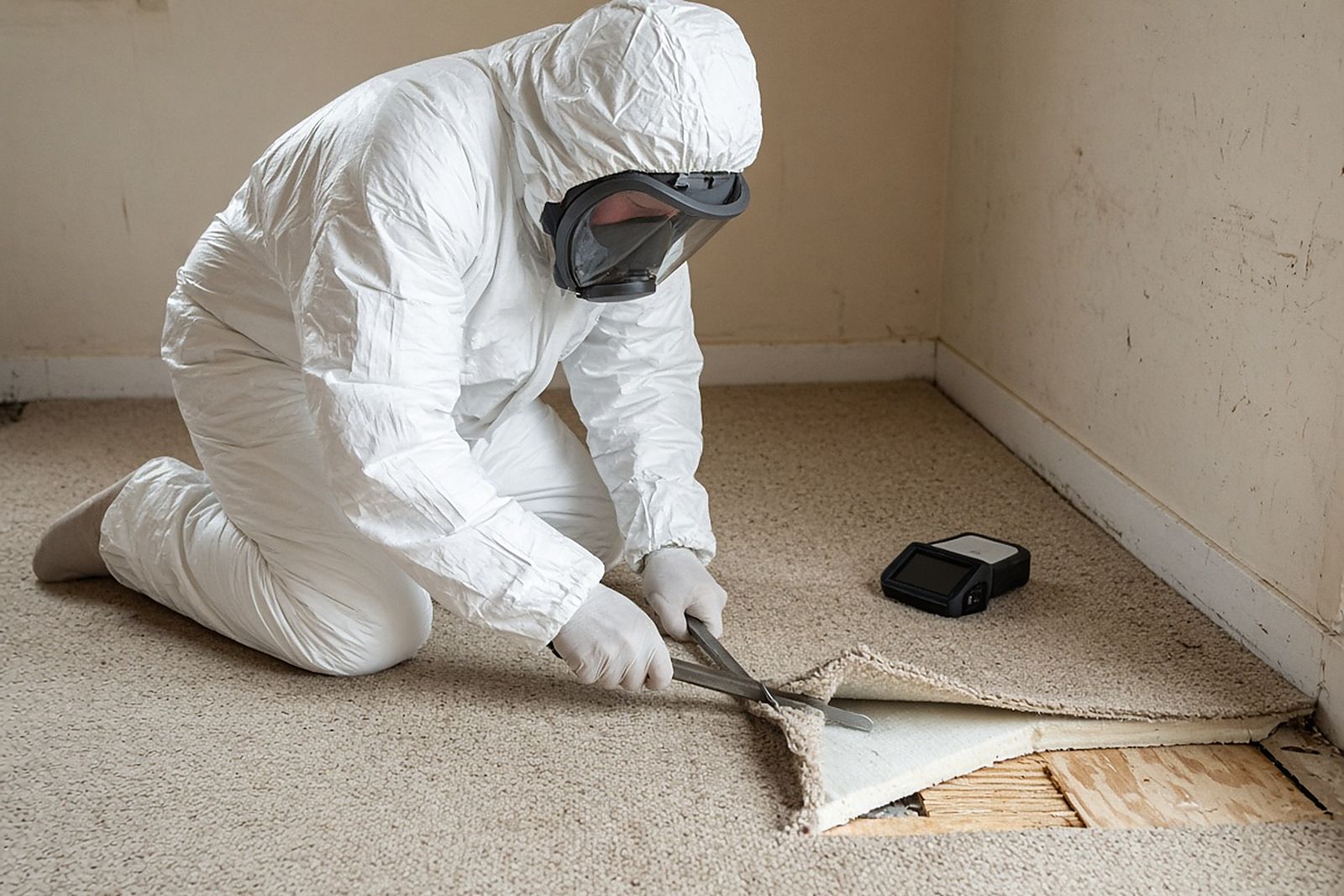 How to Research Waste Rules for Unattended Death CleanupTo research waste rules after an unattended death, sort what the job will produce: regulated waste such as saturated flooring and furniture, sharps, spoiled food, general household contents and estate items to keep. Then check your state's medical waste program, since federal EPA oversight ended in 1991, along with hauler registration, tracking and local landfill rules. Ask providers for disposal records suitable for the estate file.The Difference Between Cleaning and Disinfection in Unattended Death CleanupIn unattended death cleanup, cleaning removes decomposition fluids, residue and debris; disinfection applies a registered product for its full contact time to inactivate remaining pathogens; and deodorization addresses odor after the source is gone. Because fluids spread into porous and hidden materials over time, those materials are usually removed first. Sealers and fragrances are finishing tools, not substitutes for cleaning or disinfection.When ATP Testing Helps—and When It Does Not—in Unattended Death CleanupIn unattended death cleanup, ATP testing is a spot check that hard, cleanable surfaces are free of organic residue after decomposition fluids are removed. It cannot measure odor, look beneath flooring, judge sealed subfloor, confirm insects are gone or identify pathogens. Ask for ATP as one piece of a written verification plan that also covers material removal, odor evaluation, photographs and disposal records.