Short answer
Evaluate equipment proposed for unattended death cleanup by matching it to the home's condition: how long the person went undiscovered, how far fluids traveled, whether insects spread and how strong odor has become. Expect respirators for odor and dust, tools for removing flooring and subfloor, insect and odor control after source removal, encapsulating sealers, HVAC attention and verification records. Question anything generic, unexplained or used in place of removal.
Why equipment matters more after an unattended death
When a death goes unnoticed for days or weeks, the home changes in ways that call for more specialized gear than most cleanups. Fluids may have moved into subfloor and framing. Odor may have soaked into drywall, insulation and ductwork. Insects may be present in several rooms. Each of these problems has its own tools.
That also makes this kind of job easy to oversell. Dramatic odor machines and whole-house treatments can sound like the answer, but none of them works if contaminated materials stay in place. The best proposals start with removal and cleaning and then add equipment in a logical order.
Reading the list with a few simple questions in mind will help you tell the difference, even if you are managing things from another city.
A useful habit is to read the list in the order the work will happen. Protective gear and containment come first, then removal tools, then cleaning and disinfecting products, then insect and odor control, then sealing and verification. If the list jumps straight to odor machines, or skips removal entirely, that sequence is out of order and worth questioning.
Protective gear and containment
Technicians need protection from bloodborne pathogens, bacteria that multiply during decomposition, dust from removed materials and strong odor compounds. Expect fluid-resistant coveralls, double gloves, boot covers and eye protection.
Respiratory protection deserves special attention. Odor after an unattended death can be intense, and cutting out flooring creates dust. Many providers use full-face or half-face respirators with combination cartridges that filter particles and organic vapors. Respirator users should be fit tested and trained under an employer's respiratory protection program.
Ask where the crew will put on and remove gear and how used equipment will be bagged. A designated area near the exit of the work zone keeps contamination and odor from following technicians through the house.
Containment supplies protect the parts of the home that were not affected. Plastic sheeting, zipper doors, floor protection and vent covers are low-cost items, but they keep odor and dust from spreading while flooring is cut out. In a shared building, they also protect hallways and neighboring units. If the proposal does not mention containment, ask how the crew plans to keep the work area separate.
Tools for removing flooring and structure
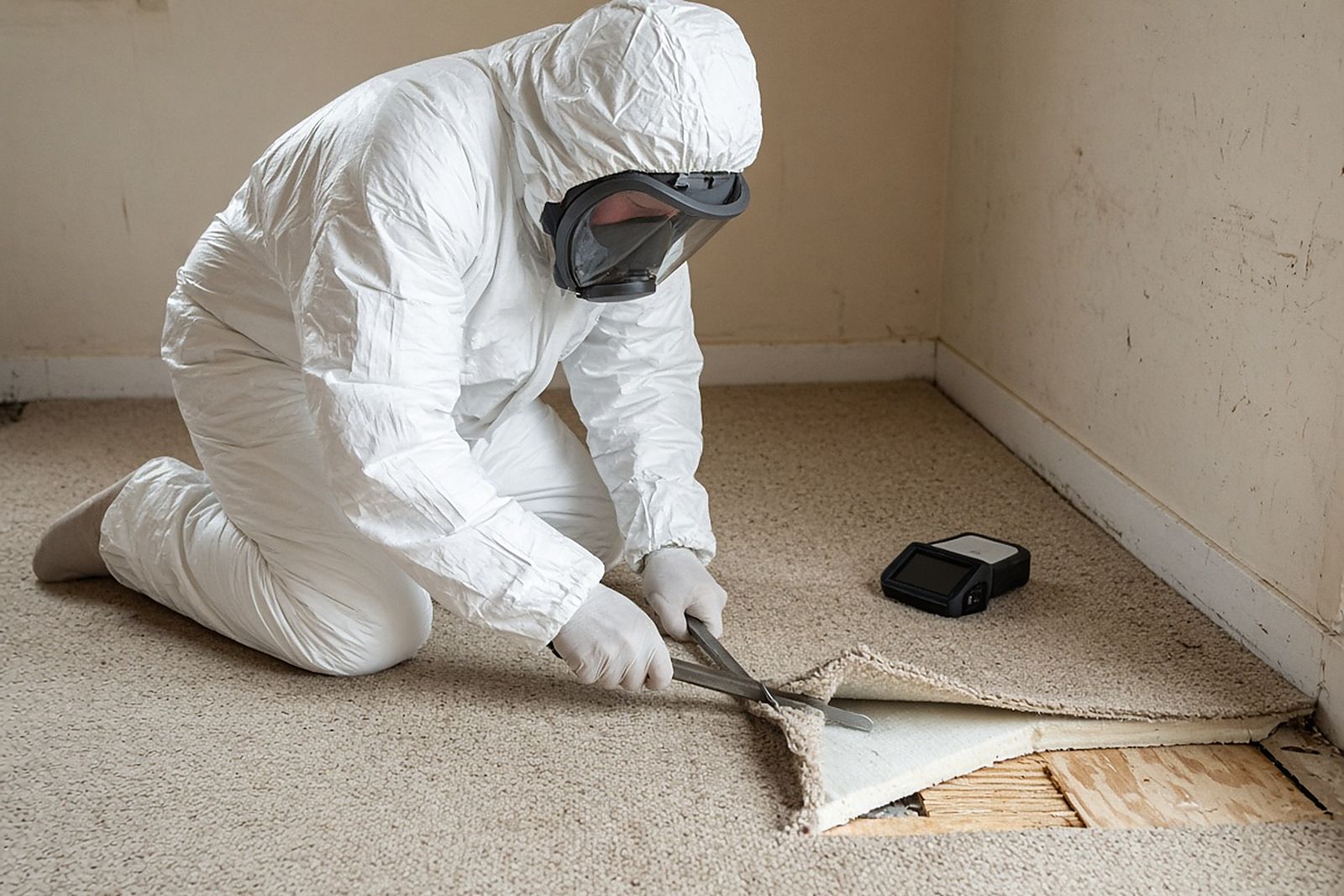
Because fluids follow gravity and spread through porous materials, structural removal is common after a delayed discovery. The proposal should mention tools for cutting carpet and pad, lifting hardwood or vinyl, removing baseboards and cutting drywall, and for opening subfloor if needed. Oscillating tools, pry bars, controlled-depth saws and heavy-duty bags or wrap are typical.
Inspection tools help the crew know where to stop. Bright, angled lights reveal staining. Moisture meters show whether subfloor or framing is still damp. Cameras record what was found at each stage, which helps families, insurers and repair contractors understand the scope.
In multi-story buildings, ask how the crew will check the ceiling or unit below, and what access they will need from the association or landlord.
- Carpet cutters, pry bars and oscillating tools for flooring and trim
- Controlled-depth saws for subfloor sections
- Moisture meters and inspection lights
- Heavy-duty bags, wrap and rigid containers for removed materials
- Cameras for stage-by-stage documentation
How should insects be handled?
Insects are a normal part of decomposition, and after a delayed discovery they may have spread beyond the room where the person was found. Adult flies often collect at windows and lights. Larvae may move under furniture, along baseboards or into other rooms before they mature.
Equipment for this part of the job typically includes HEPA vacuums for insects and casings, cleaning supplies for sills and fixtures, and sealed containers for removal. If insecticide is needed, it should be applied according to its label, and some jurisdictions require a licensed pest control applicator. Ask whether the provider handles this directly or coordinates with a pest control company.
A good plan also covers follow-up. If insects appear after the crew leaves, the provider should return to find and treat the source.
Insect activity can also affect belongings. Clothing, bedding and upholstered items near the affected area may hold eggs or casings. Ask how the crew will check saved items before they are returned, so nothing is carried into another home.
Odor machines, sealers and HVAC care
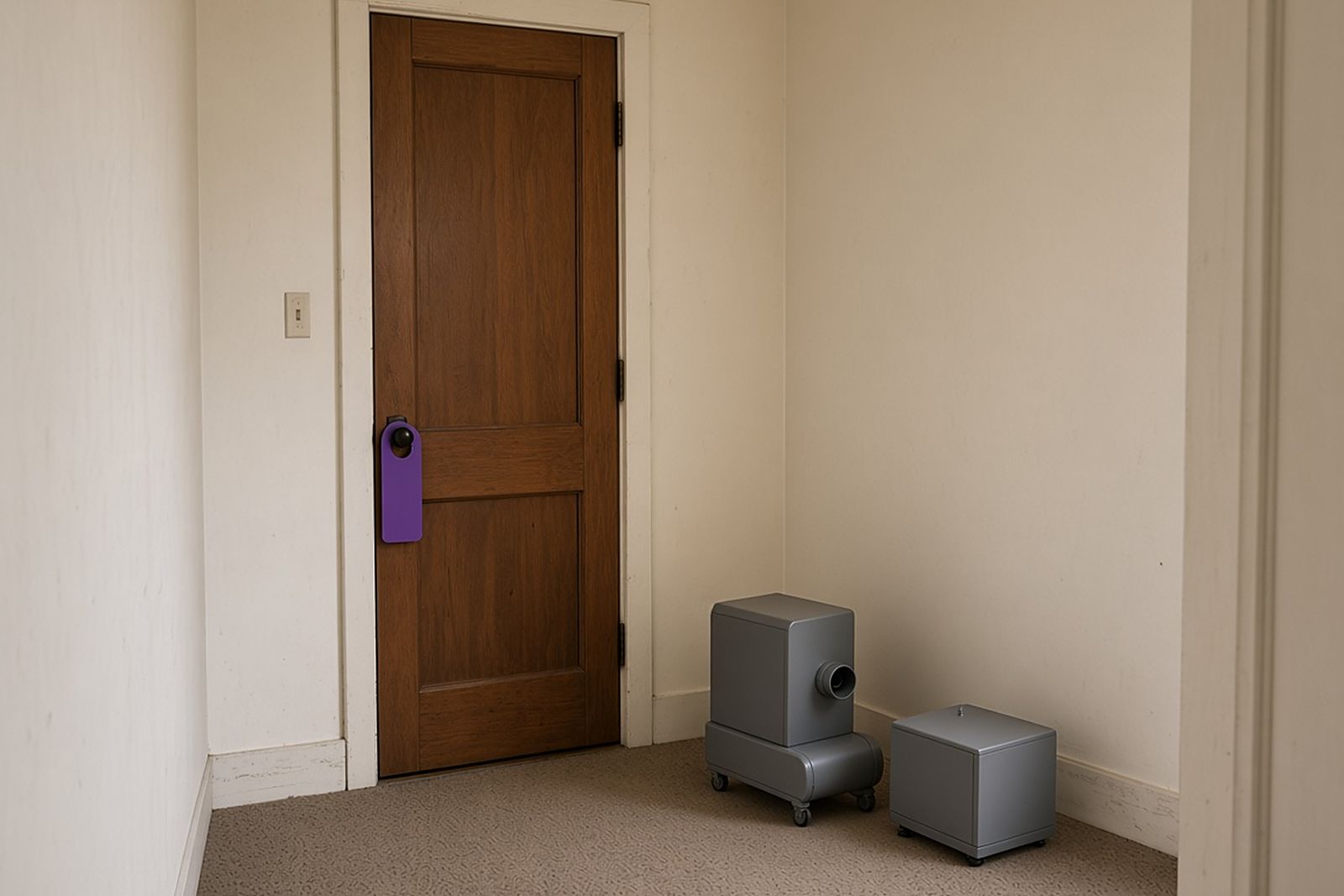
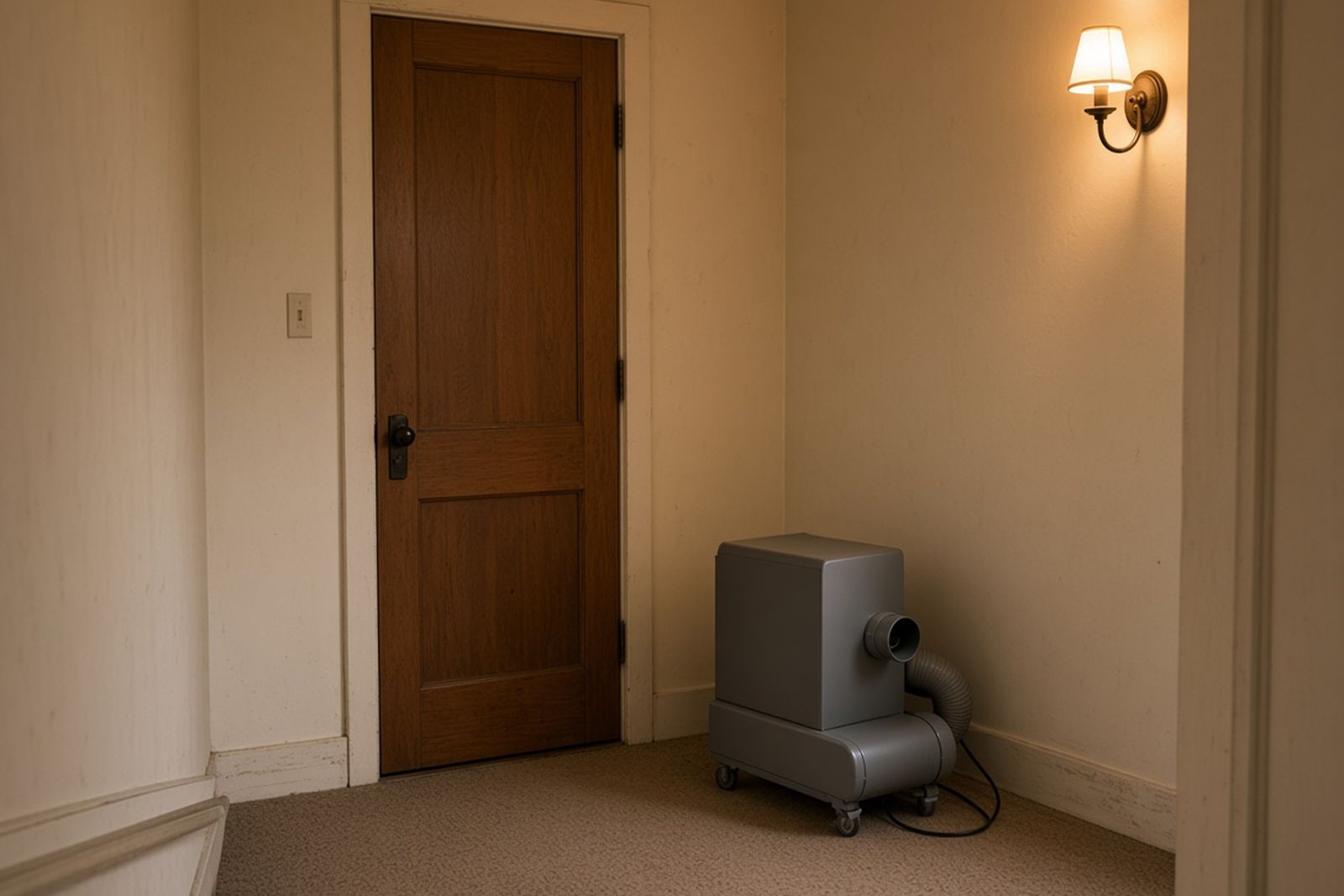
Odor control is where proposals vary most. Common tools include HEPA air scrubbers, hydroxyl generators, ozone generators and thermal or ultra-low-volume foggers. Each has a role, and each has limits.
Ozone can be effective but requires the home to be empty of people, pets and plants, and it may damage rubber, some plastics and certain fabrics. Hydroxyl generators work more slowly but can run with people nearby. Foggers distribute deodorizers or disinfectants but do not remove contaminated materials. None of these replaces source removal.
Ask why a particular method was chosen, how long it will run, when the home will be safe to enter and how the provider will confirm the odor is gone. A strong plan includes a recheck after the home has been closed up for a period.
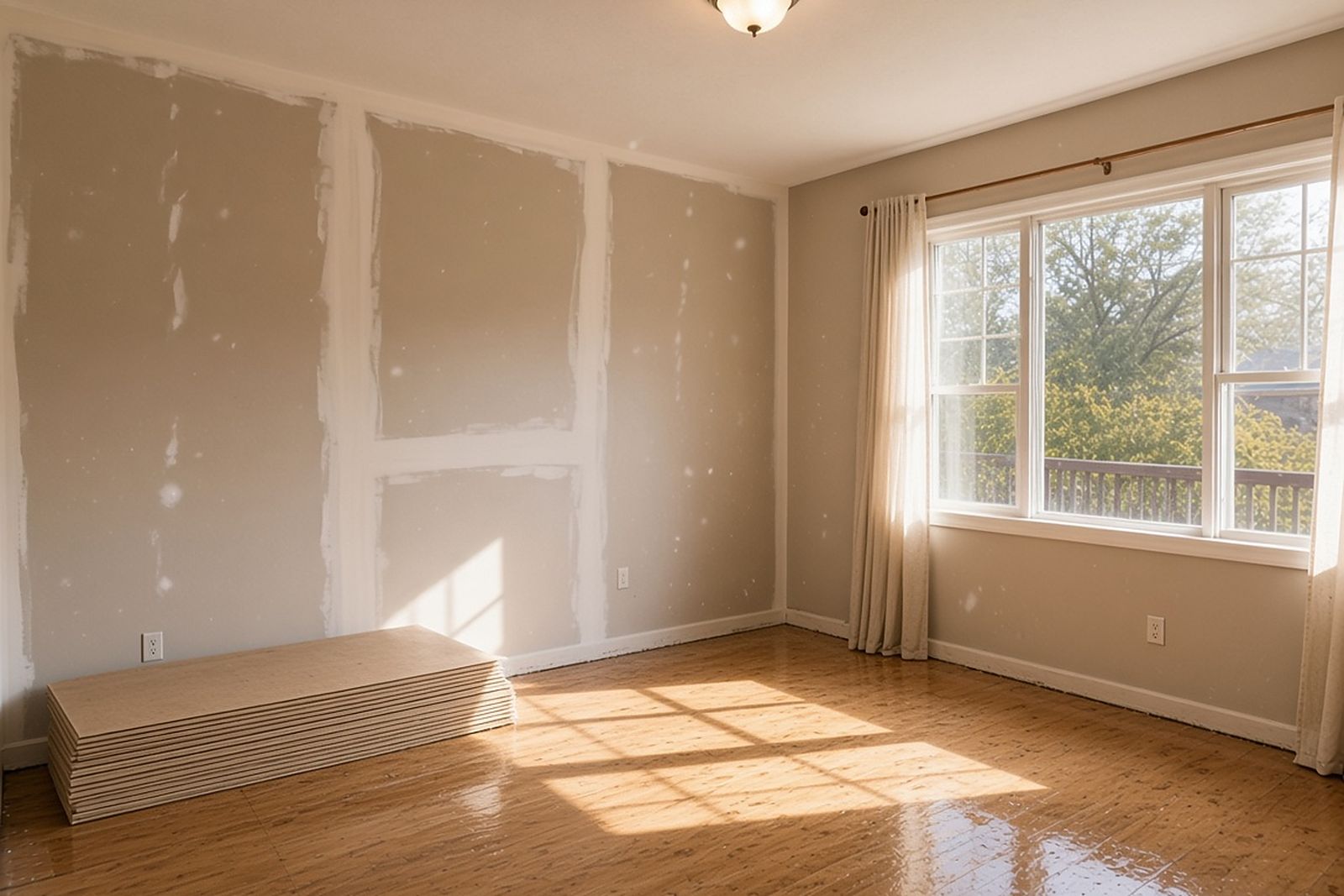
Subfloor, joists and framing that are sound but stained can often be cleaned, disinfected, dried and then coated with an encapsulating sealer. The sealer locks in residual staining and odor before new flooring goes down. It should never be used to cover material that still needs to be removed or cleaned.
Heating and cooling systems can carry odor throughout the home, especially if they ran while the person was undiscovered. A thorough proposal may include covering vents during work, replacing the system filter, cleaning registers near the affected room and recommending duct cleaning by a qualified contractor if odor persists.
Ask which sealer will be used and whether moisture readings will be taken first. Flooring installers may need to know the product later.
Cleaning products should be named here as well. Enzyme cleaners break down organic residue on structural wood and concrete, and an EPA-registered disinfectant with a clear label contact time should follow before any sealer goes on.
Two proposals for the same house
An illustrative comparison, with details made up for this article, shows the difference. A man in his seventies dies in the living room of his single-story house during a hot summer month. He is found after about three weeks. His daughter, who lives across the country, receives two proposals.
The first lists full-face respirators with combination cartridges, removal of the recliner, carpet, pad and a section of subfloor, moisture readings before sealing, a named encapsulating sealer, HEPA vacuuming of insects in the living room and kitchen, coordination with a licensed pest control company, a hydroxyl generator followed by a recheck, a new HVAC filter and a closing report with photos.
The second lists general protective equipment, whole-house ozone treatment, thermal fogging and carpet shampooing, with no mention of subfloor, insects or the HVAC system.
The first plan addresses the source, the spread and the verification. The second may briefly mask odor but leaves contaminated materials in place. The scenario is simplified, but the contrast is typical.
What if the home is full of belongings?
Many people who die alone lived in homes filled with a lifetime of possessions, and some lived with serious clutter. The American Psychiatric Association notes that hoarding disorder affects about 2.6% of the population, with higher rates in people over 60. Heavy contents can hide contamination, slow removal and require extra equipment.
In those cases, a proposal may include roll-off containers, additional crew, sorting tables and clean bins for items the family wants to keep. Ask how the crew will separate decontamination of the affected area from general clean-out, and how they will protect documents, photographs and valuables they find.
Waste from the affected area is regulated and must be packaged and transported properly. Ordinary household contents may follow a different path. Requirements differ by location, so ask the provider which state agency governs its disposal.
Verification tools and records to expect
Verification turns equipment into evidence. Expect a final inspection under strong light, moisture readings on sealed surfaces, an odor check after the home has been closed up and, with some providers, ATP swab readings that show organic residue was removed.
If you cannot be there in person, ask for a short video walkthrough at the end. Seeing the finished rooms, the sealed subfloor and the clean windowsills can give you confidence that the work matches the report.
Ask for a closing report that includes photos at each stage, product names, the odor method used and how long it ran, insect control steps, a list of materials removed, an inventory of items saved and waste disposal records. If an item appears on the invoice, it should appear somewhere in the report.
Keep these records with the estate papers. They will help if the home is sold, rented or inspected in the future, and they show that the work was done with care.