Short answer
PPE for unattended death cleanup is chosen after a written hazard assessment. Because decomposition may have continued for days or weeks, crews evaluate odor and air quality, how far fluids have moved into flooring and furniture, insect activity, heat, clutter and the chemicals they will use. Those findings decide respirator type and cartridges, suit and glove layers, eye protection, footwear and work-rest schedules.
Why PPE planning is different here
When someone dies at home and is not found right away, the room keeps changing. Decomposition releases fluids and gases, odor spreads, insects arrive and materials beneath the surface absorb more over time. By the time a crew arrives, the hazards may reach well beyond what anyone sees from the doorway.
The length of that interval varies widely. Researchers writing in the International Journal of Legal Medicine in 2023 studied 102 decomposed bodies found indoors in Sweden and reported a post-mortem interval ranging from 3 to 217 days, with a median of 21 days.
Because conditions range so much, a fixed kit will not do. The crew lead has to assess each home and plan protection for what is actually there.
What the hazard assessment checks
OSHA's general PPE standard requires employers to evaluate workplace hazards before choosing protective equipment and to document that evaluation. For unattended death cleanup, the assessment is often the most detailed of any biohazard job, because so many variables interact.
The crew lead enters only after the medical examiner or coroner and any law enforcement have released the property. They walk through slowly, note conditions room by room and look for signs that fluids or odor have moved beyond the original area.
- Strength and spread of odor, including in rooms far from the affected area
- How deeply fluids penetrated carpet, pad, subfloor, mattresses and furniture
- Flies, larvae, pupal casings or other insect activity
- Indoor temperature and whether the HVAC system has been running
- Clutter, stored items or blocked pathways
- Needles, medications or medical equipment in the home
- Chemicals planned for cleaning, deodorizing and disinfection
Which respirators suit an unattended death scene?
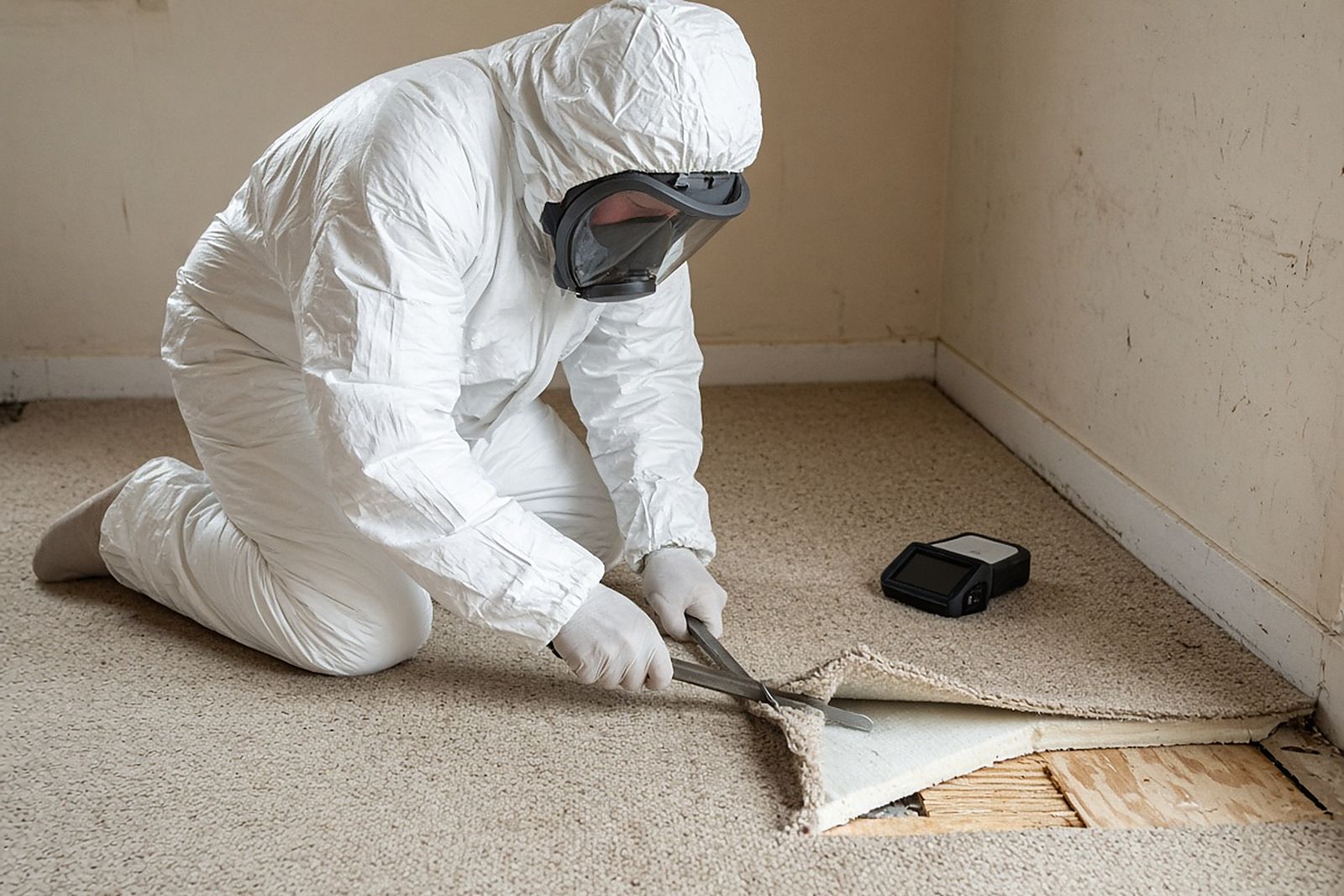
Air quality is usually the defining concern. Odor-causing gases can be strong enough to cause headaches and nausea. Cutting out flooring and drywall releases particles. Disinfectants and odor treatments can add vapors of their own. Many crews choose full-face respirators for the heaviest work, both for the higher level of protection and because the facepiece shields the eyes.
Filter and cartridge selection depends on the hazards. Particulate filters address dust and droplets, while chemical cartridges address certain vapors. Crews often use combination cartridges and change them on a schedule rather than waiting until the wearer notices odor coming through.
Tight-fitting respirators only work when they seal, so OSHA requires a written respiratory program, a medical evaluation for each wearer and fit testing before use and at least once a year. A provider that describes this program plainly is showing you it takes the most important hazard seriously.
Odor itself is not always a reliable warning. People can become used to a smell within minutes, a process sometimes called odor fatigue, so crews rely on their assessment and cartridge schedules rather than on what they notice while working.
Suits, gloves and boots
Fluid migration is common after an unattended death, so body protection is usually heavier than at a smaller biohazard job. Impervious or fluid-resistant suits with attached hoods are typical. Tape seals the cuffs at wrists and ankles, and some crews add aprons or sleeve covers for tasks such as lifting saturated mattresses.
Gloves are layered. A thin nitrile glove sits against the skin, and a thicker chemical-resistant glove goes over it. Cut-resistant layers are added for broken items, carpet tack strips or sharp edges exposed during demolition. Outer gloves are replaced often.
Feet need protection from both fluids and chemicals. Chemical-resistant boots or durable boot covers keep contamination from reaching other rooms, and crews change or clean them at a set point before leaving the work zone.
The employer covers all of this. OSHA's 2008 PPE rule states that since February 13, 2008, it has required employers to provide required personal protective equipment at no cost to employees, which supports frequent changes of suits, gloves and cartridges on long jobs.
Insects, heat and clutter
Insects are a normal part of decomposition and can move through a home quickly. Crews may seal doors and vents, treat the space and remove larvae and casings before beginning deeper cleaning. Boot covers and taped cuffs keep insects from traveling on clothing.
Heat is a serious risk inside protective gear. Homes closed up during warm months can be very hot, and impervious suits trap body heat. A careful crew lead schedules frequent breaks outside the work area, provides water, rotates workers through the most strenuous tasks and watches for early signs of heat illness.
Clutter adds physical hazards. Narrow paths, stacked items and unstable furniture make trips, falls and strains more likely. The assessment should plan how the crew will clear a safe route before handling saturated materials.
From assessment findings to a PPE plan
The link between the assessment and the gear is easiest to see when you follow specific findings through to specific choices. Suppose the notes record strong odor throughout a small house, fluid through a recliner into carpet, pad and plywood subfloor, heavy fly activity, a failed air conditioner in late summer, insulin syringes on a counter and newspapers stacked along a wall.
Findings like those usually point to full-face respirators with combination cartridges for everyone working inside, each wearer with a current medical evaluation and fit test. Technicians wear impervious hooded suits, nitrile inner gloves, chemical-resistant outer gloves and cut-resistant gloves for pulling tack strips. Chemical-resistant boots stay inside the containment boundary.
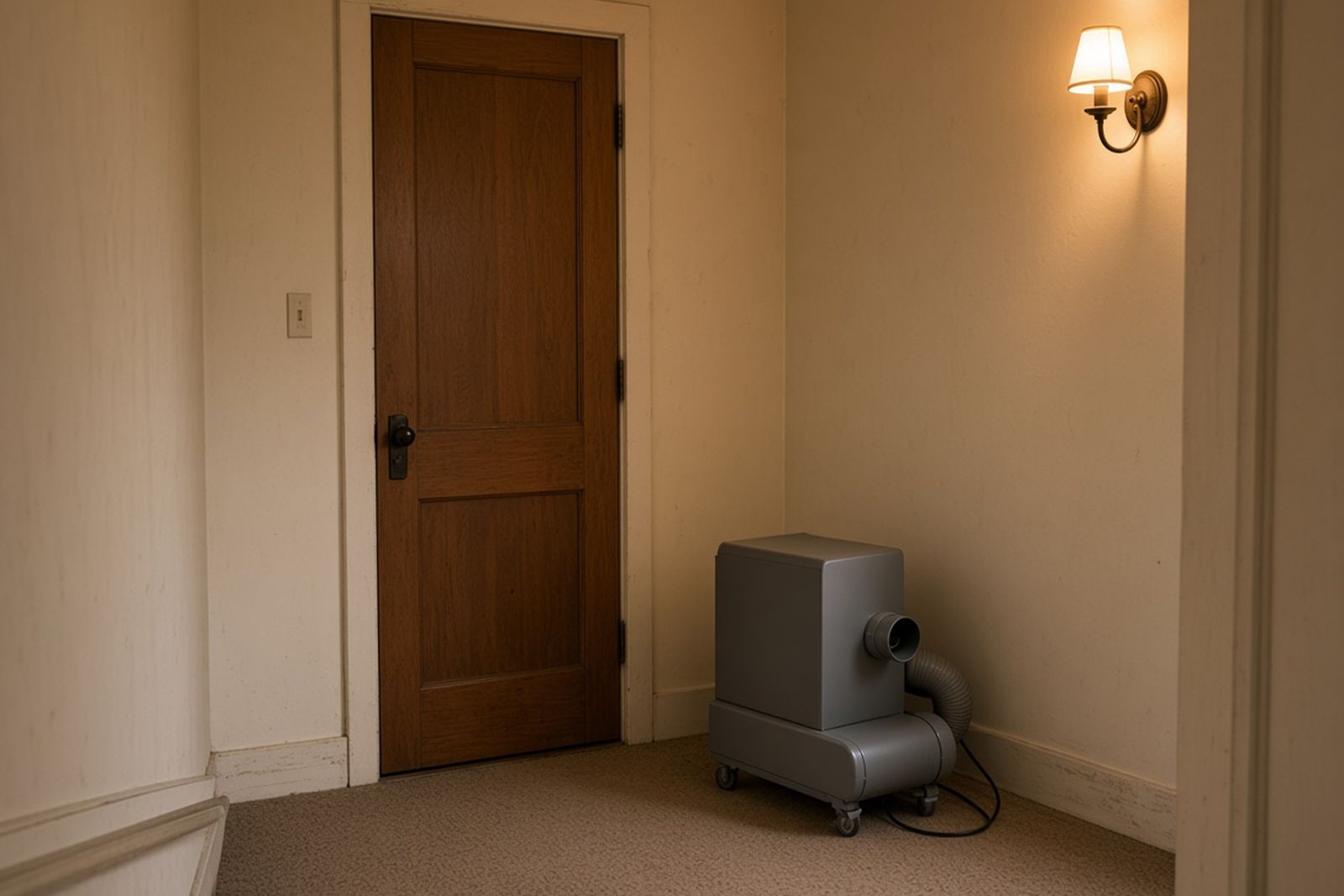
The heat calls for short work periods followed by rest in a shaded area outside, with a portable cooling fan in the decontamination zone. The syringes go into a sharps container. The recliner is wrapped before removal, and subfloor sections are cut out and packaged as regulated waste. Each PPE decision flows from something the assessment found.
Does anyone else in the home need protection?
PPE planning is about the crew, but the assessment also considers everyone else who might come near the work. Relatives sometimes want to retrieve documents, photographs or valuables before cleanup begins. Landlords may need to inspect the unit, and neighbors in shared buildings may notice odor in hallways.
A careful provider will advise that no one without protective equipment enter the affected area until work is complete. If an important item must be retrieved early, the crew can often locate it, clean its exterior and hand it over outside the containment zone.
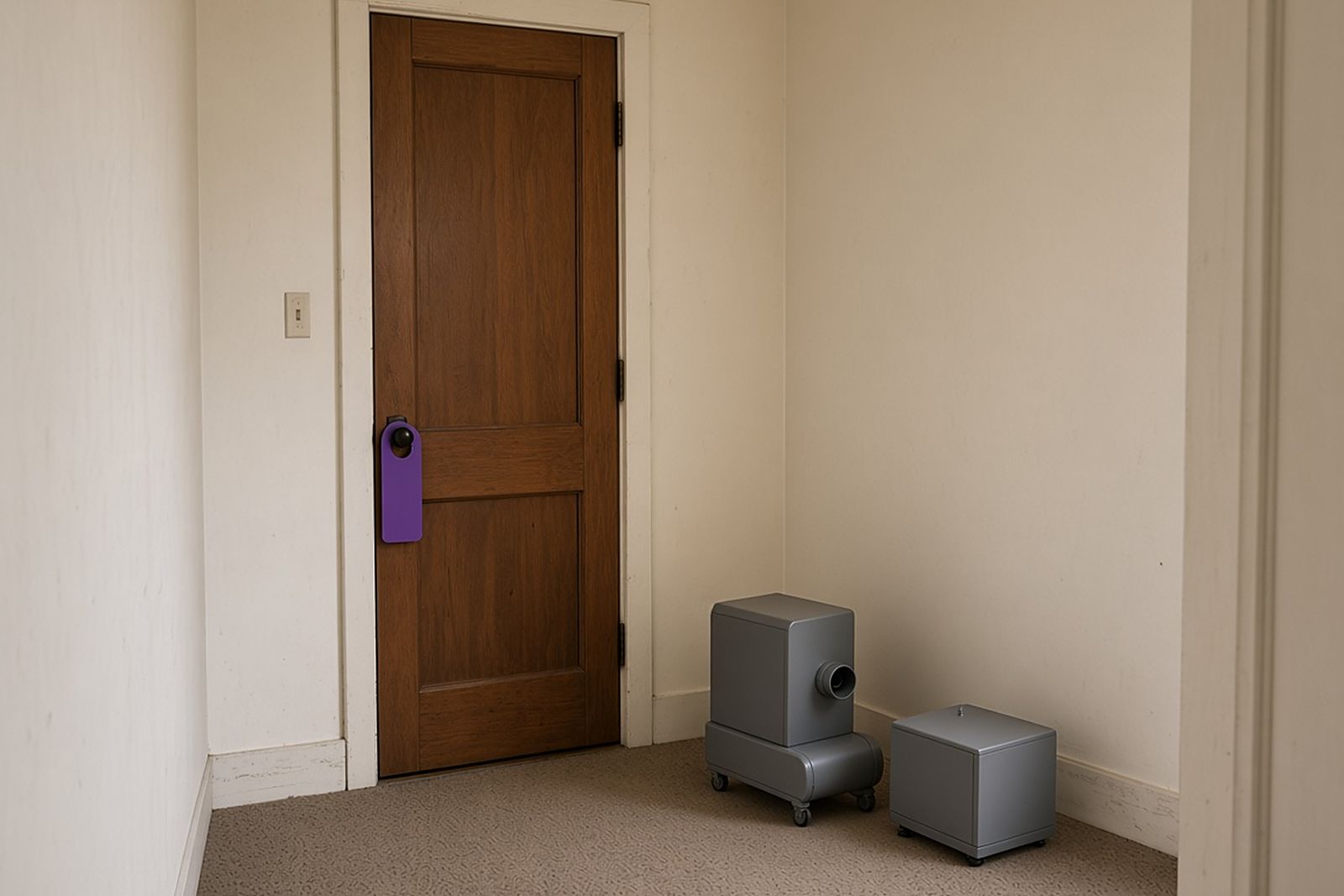
In apartment buildings, the lead may also coordinate with the property manager to seal shared vents, keep hallway doors closed and schedule removal of large items at quiet times. These steps protect other residents while respecting the privacy of the person who died and their family.
Pets deserve a mention too. If an animal lived in the home, it should be cared for elsewhere until the space has been cleaned and verified.
Taking gear off and disposing of it
Crews set up a decontamination area at the edge of the work zone, often near an exterior door. There, technicians remove gear in a practiced order: outer gloves and boot covers, then the suit rolled inside out, then the respirator by its straps, then inner gloves, followed by handwashing.
Everything contaminated goes directly into labeled bags that are sealed before leaving the area. Respirator facepieces that will be reused are cleaned and disinfected according to the manufacturer's instructions, and used cartridges are discarded.
On long jobs, crews may repeat this process many times a day. It takes time, but it is the step that keeps odor and contamination from leaving the house on clothing, tools or vehicles.
Five PPE questions for the family or executor
Families and executors often arrange this work from a distance, so a few focused questions are helpful. A property manager, attorney or friend can ask them for you.
Worker safety rules come from OSHA or a state plan. Waste transport, disposal and any business registration come from other agencies, usually at the state level.
Please remember that a delay in discovery is rarely anyone's fault. People live independently for many good reasons. Let the crew handle the hazards, and give yourself room to grieve.
- Will you document a hazard assessment before choosing equipment?
- Which respirators will the crew use, and are wearers fit tested this year?
- How will you manage heat stress in a closed or hot home?
- How will you control insects so they do not spread?
- Where will workers remove gear, and how will it be disposed of?